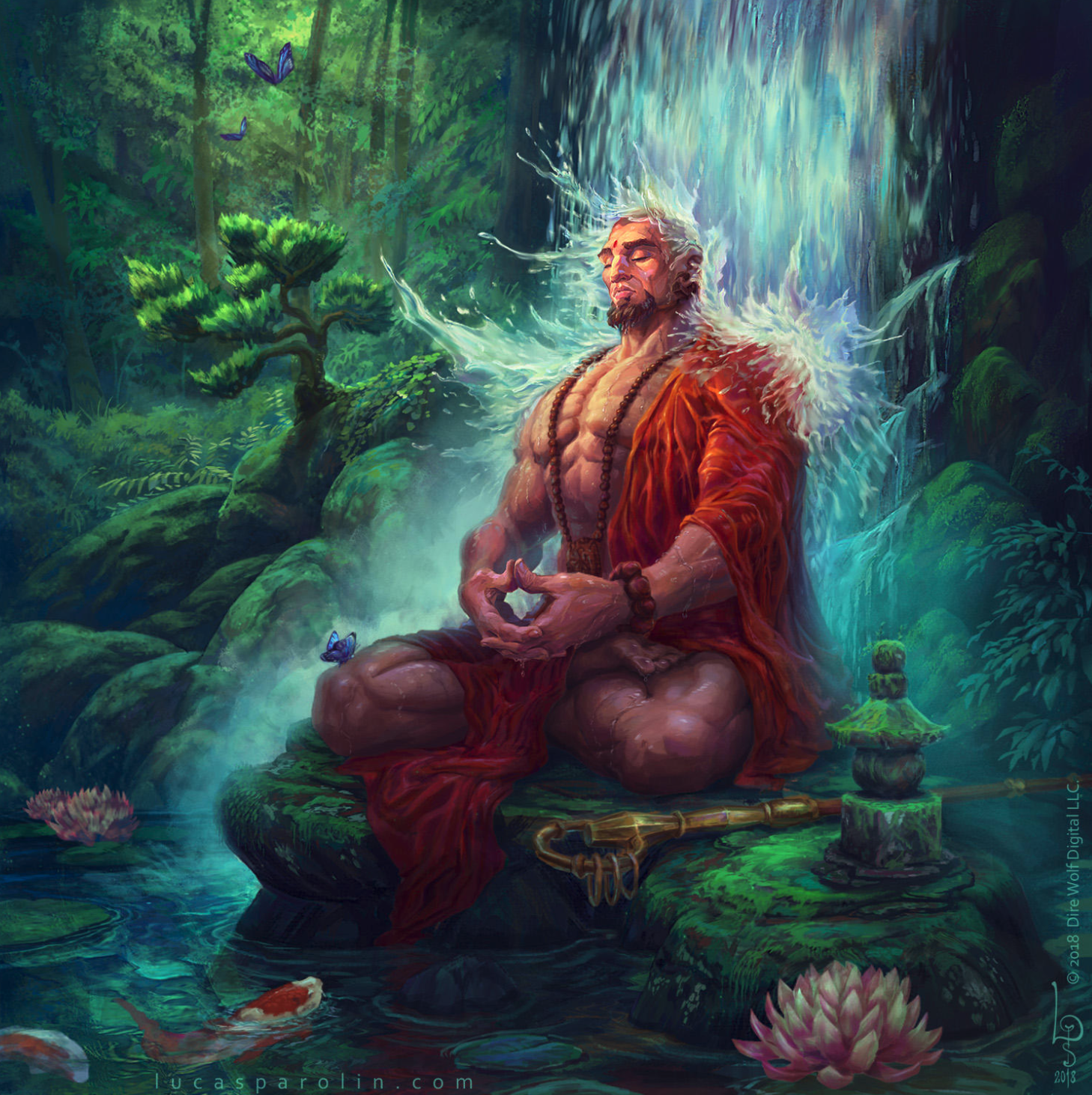
(Verse 1)Voices echo... shadows creep...External static... tries to seep...World outside... a frantic race...Losing footing... losing place...(Pre-Chorus)Breathe it low... a quiet deep...Secrets that the stillness keep...What they say... a fading hum...Only what I... will become...(Chorus)Tranquil state... the mind aligned...Inner citadel... I find...No more chaos... no more fright...Moving forward... in the quiet light...(Verse 2)Wish for nothing... 'cept what is...This acceptance... is my bliss...Internal focus... a sacred art...Playing my own... patient part...(Pre-Chorus)Breathe it low... a quiet deep...Fortress that my spirit keeps...Their opinions... drift like smoke...On my own path... I invoke...(Chorus)Tranquil state... the mind aligned...Inner citadel... I find...No more chaos... no more fright...Moving forward... in the quiet light...(Bridge)Deepest calm now... inner grace...Discard anxiety... leave no trace...Imagination's fear... now undone...Low expectations... battles won...Power over mind... not the scene...Frugal with the fucks... serene...(Chorus)Tranquil state... the mind aligned...Inner citadel... I find...No more chaos... no more fright...Moving forward... in the quiet light...(Outro)(Vocals become more layered, ethereal, swirling with reverb and delay)The quiet light... now burns within...Where peace begins... where peace begins...(Synth pulse slows, organ chords sustain and gently decay, a final haunting vocal melody emerges)My citadel stands... my tranquil core...Forever... and evermore...(Silence)
Tranquility is a state of inner peace. It's not an absence of activity, but rather a profound steadiness of mind that persists regardless of external circumstances.
Shifting focus from external outcomes to controlling internal states can lead to sustainable external success, especially in unpredictable environments. And more importantly it multiplies your chances of internal contentment.
As example for a software engineer, this means:
Prioritizing quality work processes over external unpredictable results.
Adhering to best practices in coding and communication.
Ensuring a healthy work-life balance to prevent burn out.
This approach reduces stress and increases satisfaction, as success is linked to personal growth and the quality of work, rather than external success markers that are often out of control. In other words tying success in your mind to variables that you control.
“We suffer more often in imagination than in reality.” - seneca
“You have power over your mind - not outside events. Realize this, and you will find strength.” - Marcus-Aurelius
IF you are feeling anxious. Ask: are you afraid of something? If so look at: How Get out of Fear state
How to get out of Fear
Reframe your way of thinking
Reframe your way of thinking, use cognitive distancing to see the same situation from a different view point.
Such as: Reframe thoughts as hypotheses
Reframe thoughts as hypotheses: Instead of treating a thought as a fact, you can treat it as a hypothesis that can be tested or questioned. For example, instead of thinking,
“I’m going to fail,”
you could think
“I have the thought that I might fail.”
Now you can:
Distance yourself from that thought.
Question the thought.
Or Use the third-person perspective
Use the third-person perspective: Try to look at your situation as if you were an outside observer. This can help you view your thoughts and emotions more objectively.
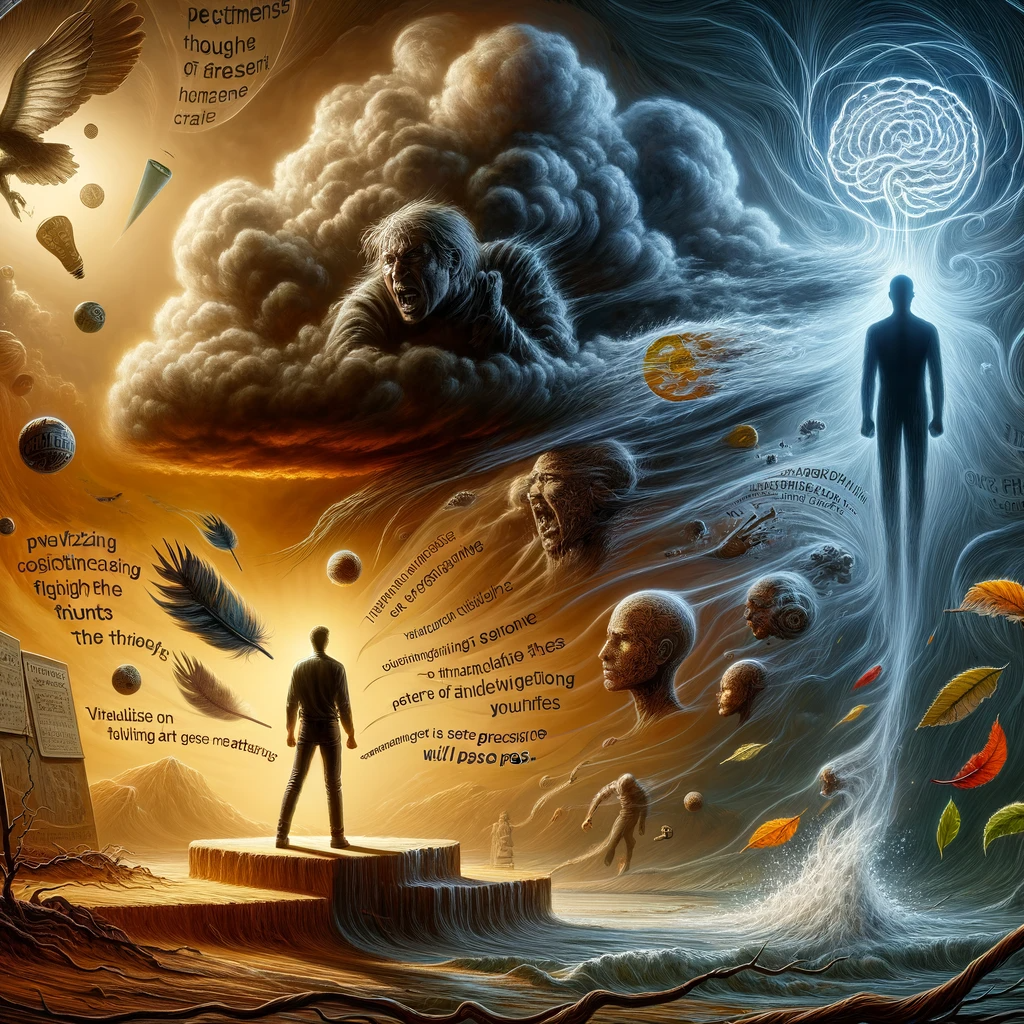
Visualize your thoughts
Visualize your thoughts: Imagine your thoughts as objects floating by on a stream, or as words written on leaves that are drifting away in the wind. This can help you see your thoughts as transient and separate from yourself.
Use visual submodalities
The visualization of thoughts advise is akin to whats called visual submodalities manipulation from nlp.
Hence, consider also consider manipulating your fears using visual submodalities to lessen the degree of your fears affecting you.
Visual Submodalities
Visual submodalities are the specific characteristics of our mental imagery. This includes aspects such as brightness, size, distance, and color, as well as the motion (or lack thereof), the image’s perspective, and whether it is viewed first-person or third-person.
Here are ways to adjust these visual submodalities to modify the intensity of their impact:
Increase Intensity
To intensify the emotional effect of a mental image, adjust its submodalities as follows:
Add motion: Make the image dynamic or moving.
Enhance brightness: Make the image brightly lit.
Enlarge: Increase the image’s size.
Saturate: Infuse the image with vibrant colors.
Decrease Intensity
To lessen the emotional effect of a mental image, manipulate its submodalities as follows:
Keep it static: Make the image stationary or still.
Diminish brightness: Make the image dim or dull.
Reduce size: Shrink the image to a smaller size.
Desaturate: Transform the image into black and white.
Why were you afraid? What made you overcome your fear?
What steps have you taken mentally to move past it?
Worst case scenario tactic
You can also use worst case scenario tactic. Imagine the worst case scenario. While imaging worst case and coping with it all of a sudden you realize the problem that you feared is not as large you have imagined.
Tranquility is a state of inner peace. It's not an absence of activity, but rather a profound steadiness of mind that persists regardless of external circumstances.
Shifting focus from external outcomes to controlling internal states can lead to sustainable external success, especially in unpredictable environments. And more importantly it multiplies your chances of internal contentment.
As example for a software engineer, this means:
Prioritizing quality work processes over external unpredictable results.
Adhering to best practices in coding and communication.
Ensuring a healthy work-life balance to prevent burn out.
This approach reduces stress and increases satisfaction, as success is linked to personal growth and the quality of work, rather than external success markers that are often out of control. In other words tying success in your mind to variables that you control.
“We suffer more often in imagination than in reality.” - seneca
“You have power over your mind - not outside events. Realize this, and you will find strength.” - Marcus-Aurelius
IF you are feeling anxious. Ask: are you afraid of something? If so look at: How Get out of Fear state
How to get out of Fear
Reframe your way of thinking
Reframe your way of thinking, use cognitive distancing to see the same situation from a different view point.
Such as: Reframe thoughts as hypotheses
Reframe thoughts as hypotheses: Instead of treating a thought as a fact, you can treat it as a hypothesis that can be tested or questioned. For example, instead of thinking,
“I’m going to fail,”
you could think
“I have the thought that I might fail.”
Now you can:
Distance yourself from that thought.
Question the thought.
Or Use the third-person perspective
Use the third-person perspective: Try to look at your situation as if you were an outside observer. This can help you view your thoughts and emotions more objectively.
Visualize your thoughts
Visualize your thoughts: Imagine your thoughts as objects floating by on a stream, or as words written on leaves that are drifting away in the wind. This can help you see your thoughts as transient and separate from yourself.
Use visual submodalities
The visualization of thoughts advise is akin to whats called visual submodalities manipulation from nlp.
Hence, consider also consider manipulating your fears using visual submodalities to lessen the degree of your fears affecting you.
Visual Submodalities
Visual submodalities are the specific characteristics of our mental imagery. This includes aspects such as brightness, size, distance, and color, as well as the motion (or lack thereof), the image’s perspective, and whether it is viewed first-person or third-person.
Here are ways to adjust these visual submodalities to modify the intensity of their impact:
Increase Intensity
To intensify the emotional effect of a mental image, adjust its submodalities as follows:
Add motion: Make the image dynamic or moving.
Enhance brightness: Make the image brightly lit.
Enlarge: Increase the image’s size.
Saturate: Infuse the image with vibrant colors.
Decrease Intensity
To lessen the emotional effect of a mental image, manipulate its submodalities as follows:
Keep it static: Make the image stationary or still.
Diminish brightness: Make the image dim or dull.
Reduce size: Shrink the image to a smaller size.
Desaturate: Transform the image into black and white.
Why were you afraid? What made you overcome your fear?
What steps have you taken mentally to move past it?
Worst case scenario tactic
You can also use worst case scenario tactic. Imagine the worst case scenario. While imaging worst case and coping with it all of a sudden you realize the problem that you feared is not as large you have imagined.
 {max-width: 300px, display: block, margin: 0 auto}